Qizhe Li
Welcome
202601
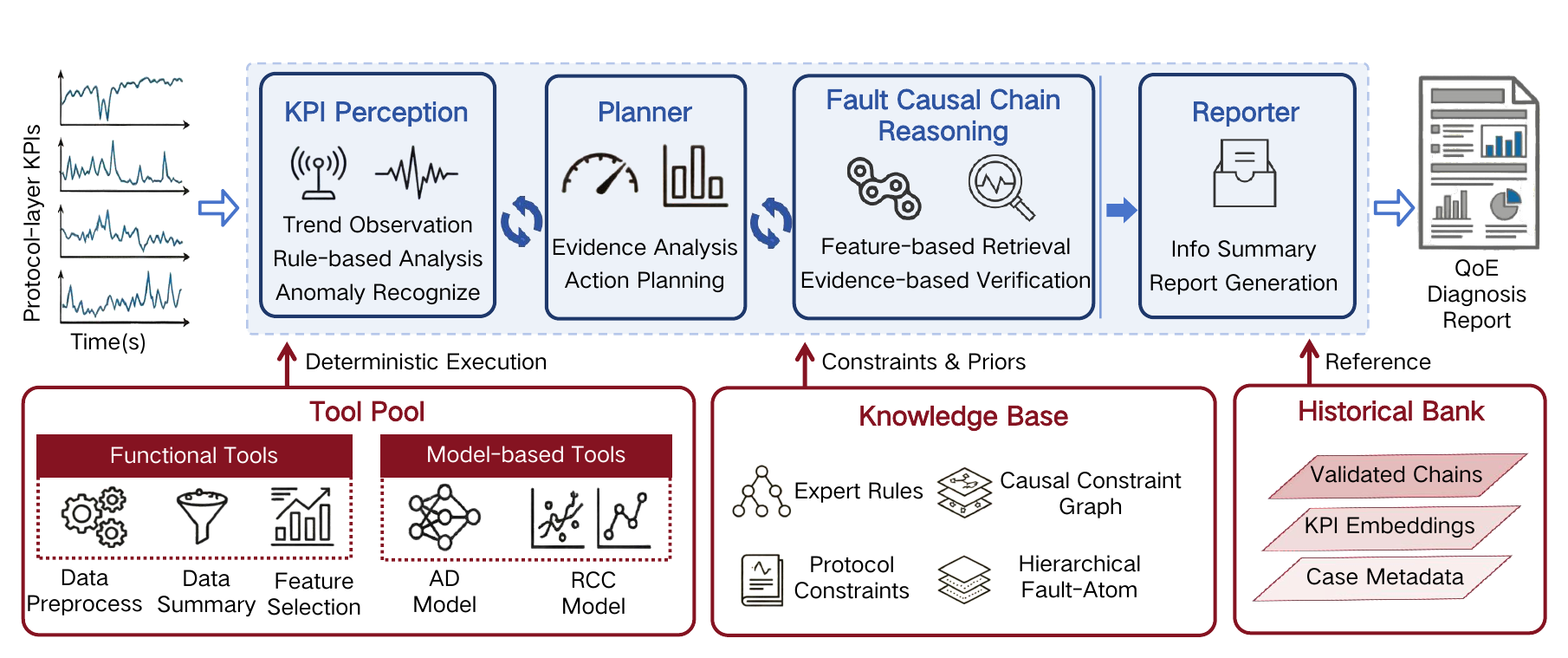
System overview of the QoEReasoner diagnostic framework
System overview from the paper.
AI for NetworksAgentic diagnosis

QoEReasoner: An Agentic Reasoning Framework for Automated and Explainable QoE Diagnosis in RANs

Q. Li, H. Chen, S. Dai, Z. Li, Z. Hu, X. Li, G. Zhu, Q. Shi

arXiv preprint

QoEReasoner is an end-to-end agentic system for explainable RAN diagnosis. Deterministic tools convert KPIs into evidence, a domain knowledge base constrains causal propagation, and a stateful planner coordinates anomaly detection and root localization.
202602
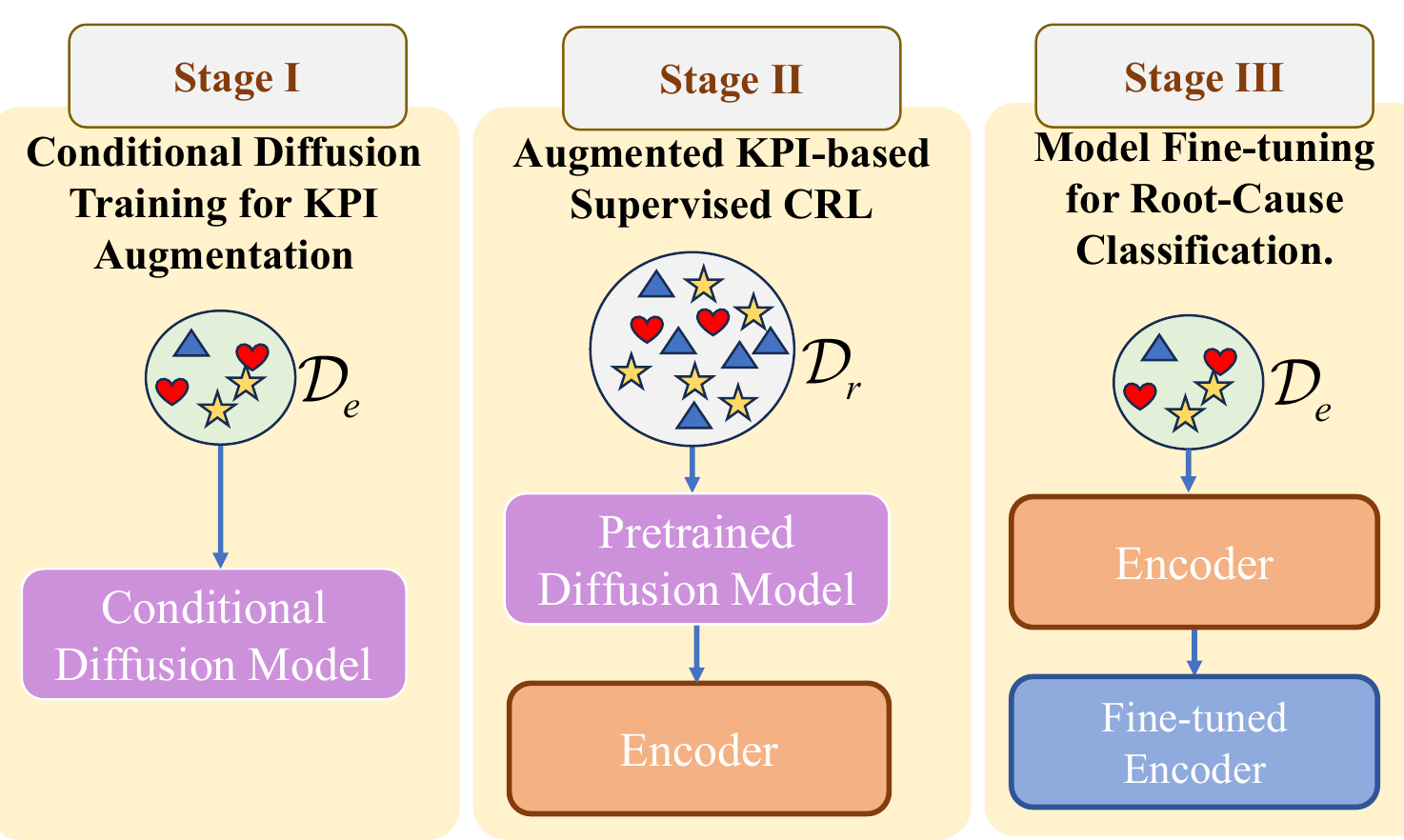
Three-stage overview of the DK-Root framework
Method overview from the paper.
AI for NetworksRoot-cause analysis

DK-Root: A Joint Data-and-Knowledge-Driven Framework for Root Cause Analysis of QoE Degradations in Mobile Networks

Q. Li, H. Chen, J. Li, S. Chai, X. Li, Y. Hou, X. Shao, F. Li, K. Han, G. Zhu

IEEE Transactions on Networking

DK-Root combines weak operational rules with scarce expert labels for mobile-network QoE diagnosis. Contrastive pretraining mitigates rule noise, conditional diffusion supplies task-faithful augmentation, and expert-guided fine-tuning sharpens the final classifier.

202603
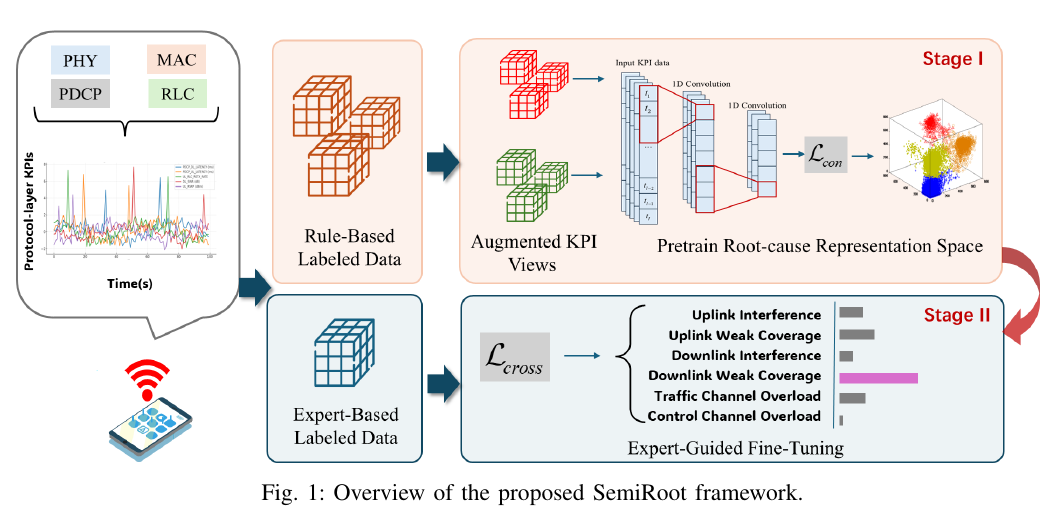
Overview of the two-stage SemiRoot framework
Framework overview from the paper.
AI for NetworksSemi-supervised learning

SemiRoot: A Semi-Supervised Deep Learning Framework for Root-Cause Analysis of QoE Degradations in Mobile Networks

Q. Li, H. Chen, S. Fu, Z. Zou, G. Zhu

IEEE ICC Workshops

SemiRoot addresses label scarcity through a two-stage semi-supervised framework. Rule-guided contrastive learning structures the representation space before a small set of expert labels calibrates the decision boundaries.

202504
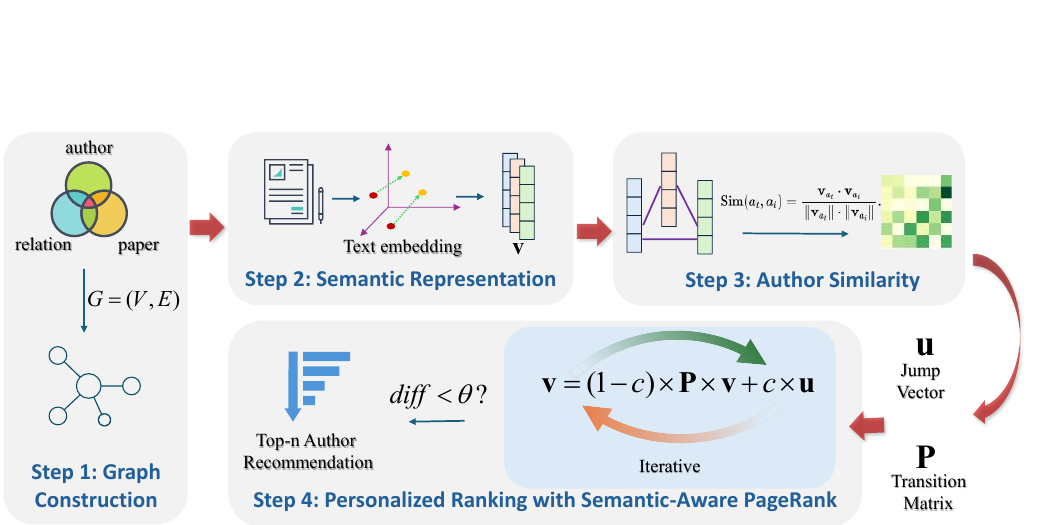
Overview of the semantic-aware Personalized PageRank pipeline
Algorithm overview from the paper.
AI for NetworksGraph intelligence

S-PPR: A Semantic-aware Personalized PageRank Framework for Academic Author Recommendation

Y. Li, Q. Li, Z. Miao

IEEE ACAI

S-PPR augments Personalized PageRank with semantic information for academic collaborator discovery, combining co-authorship frequency with title-embedding similarity in graph transitions and personalization.

202405
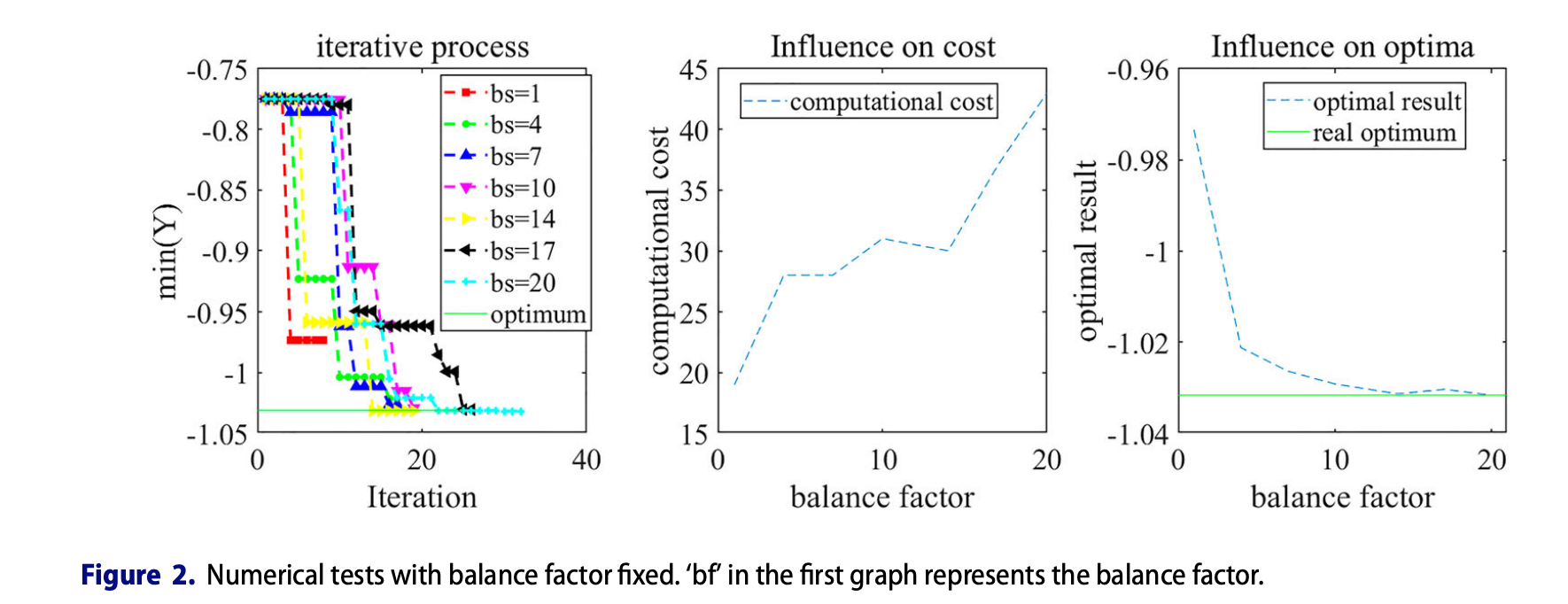
Original result figure from the REGO paper
Figure from the paper.
Uncertainty QuantificationGlobal optimization

An efficient global optimization algorithm combining revised expectation improvement criteria and Kriging

Z. Liu, H. Huang, X. Xu, M. Xiong, Q. Li

Engineering Optimization

This work revises expected improvement to better balance exploration and exploitation in Kriging-based optimization. REGO uses sample-distribution information to avoid premature convergence while retaining efficient global search.

202306
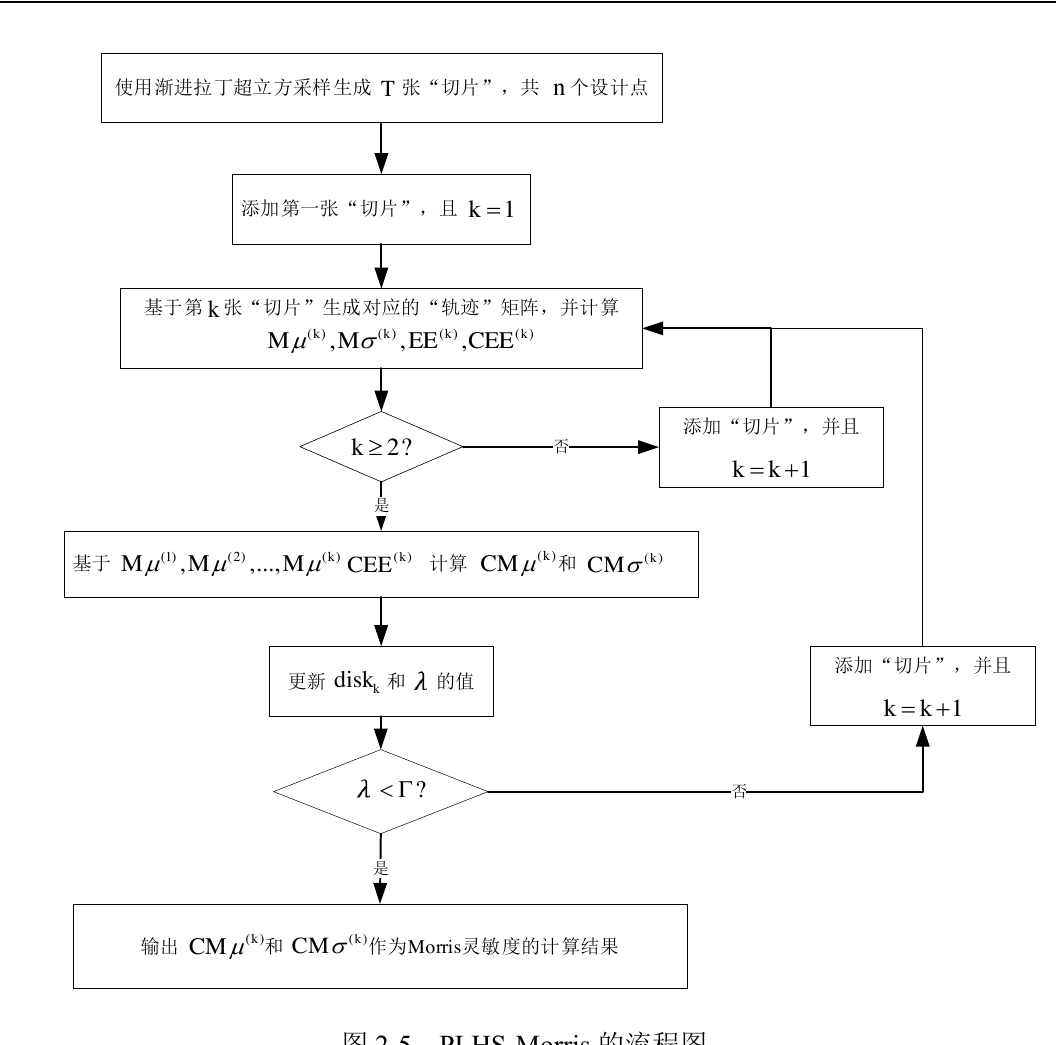
Flow chart of the enhanced Morris framework
Figure from the paper.
Uncertainty QuantificationSensitivity analysis

An enhanced framework for Morris by combining with a sequential sampling strategy

Q. Li, H. Huang, S. Xie, L. Chen, Z. Liu

International Journal for Uncertainty Quantification

A sequential Morris framework reduces the cost of sample-based sensitivity analysis. Progressive Latin hypercube sampling preserves space-filling properties while an adaptive stopping rule avoids unnecessary model evaluations.

202307
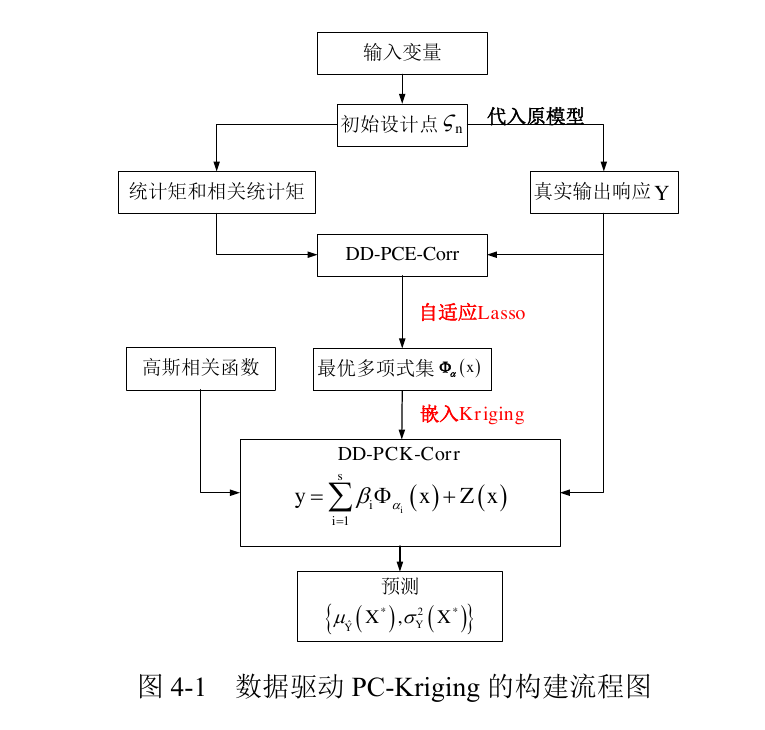
Construction process of the data-driven PC-Kriging method
Figure from the paper.
Uncertainty QuantificationSurrogate modeling

A data-driven PC-Kriging method considering correlated variables

Y. Li, Q. Li, H. Huang

International Conference on Algorithms, Computing and Artificial Intelligence

This paper develops a data-driven polynomial-chaos Kriging method for systems with correlated inputs. Adaptive Lasso selects a compact polynomial basis before it is embedded in a Kriging model.

202208
Workflow of arbitrary polynomial chaos expansion for sensitivity analysis
Figure from the paper.
Uncertainty QuantificationGlobal sensitivity

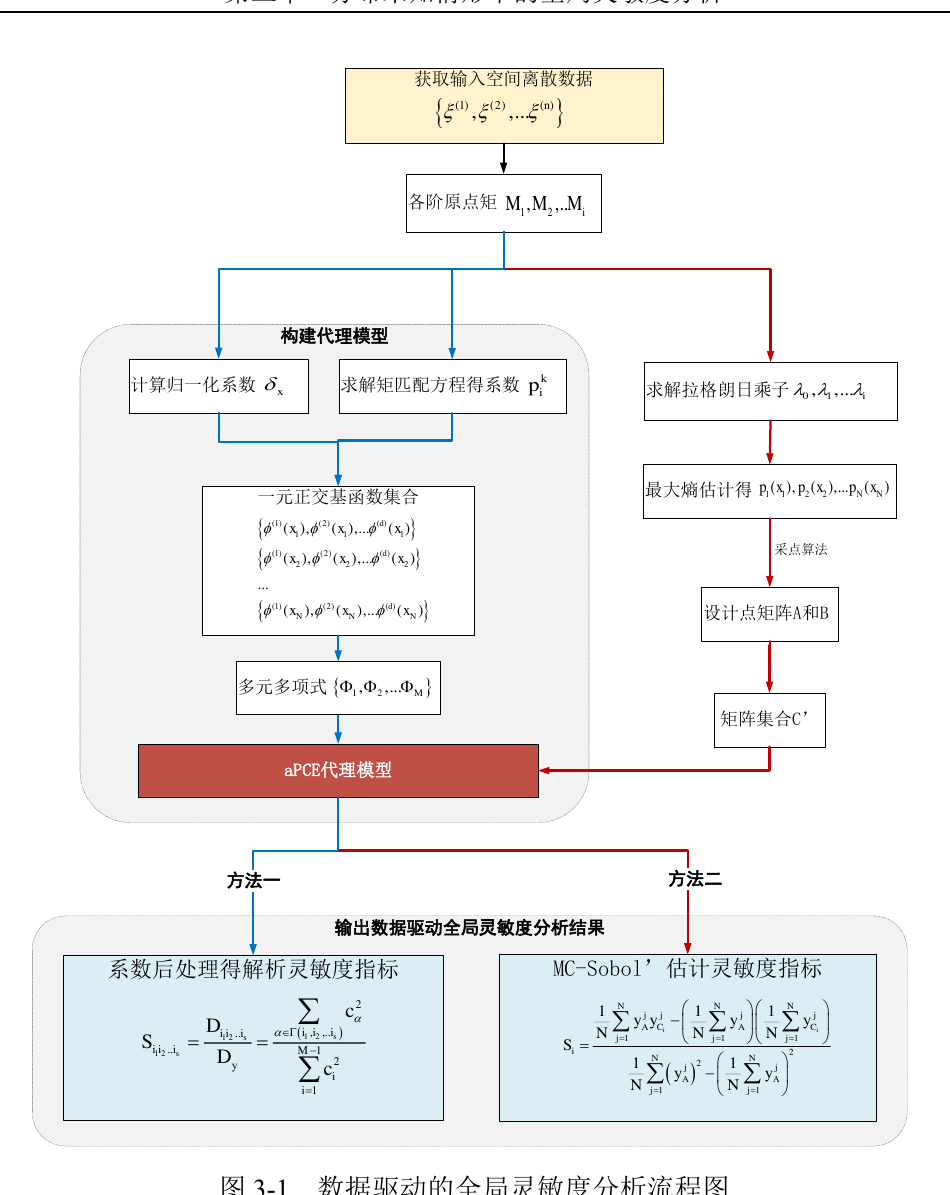
Data-Driven Global Sensitivity Analysis Using the Arbitrary Polynomial Chaos Expansion Model

Q. Li, H. Huang

IEEE International Conference on System Reliability and Safety

A global sensitivity-analysis workflow is built on arbitrary polynomial chaos expansion for cases where input distributions are only partially known, extending Sobol analysis to more realistic data-limited settings.